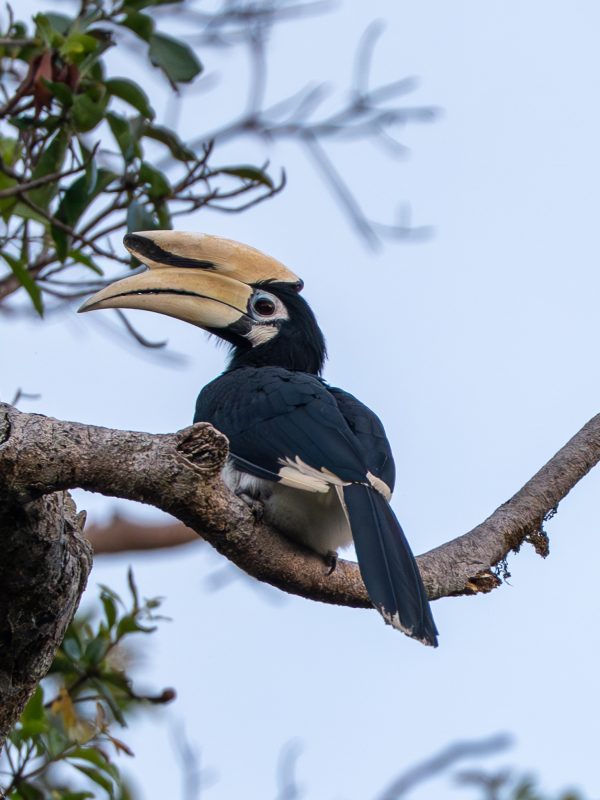
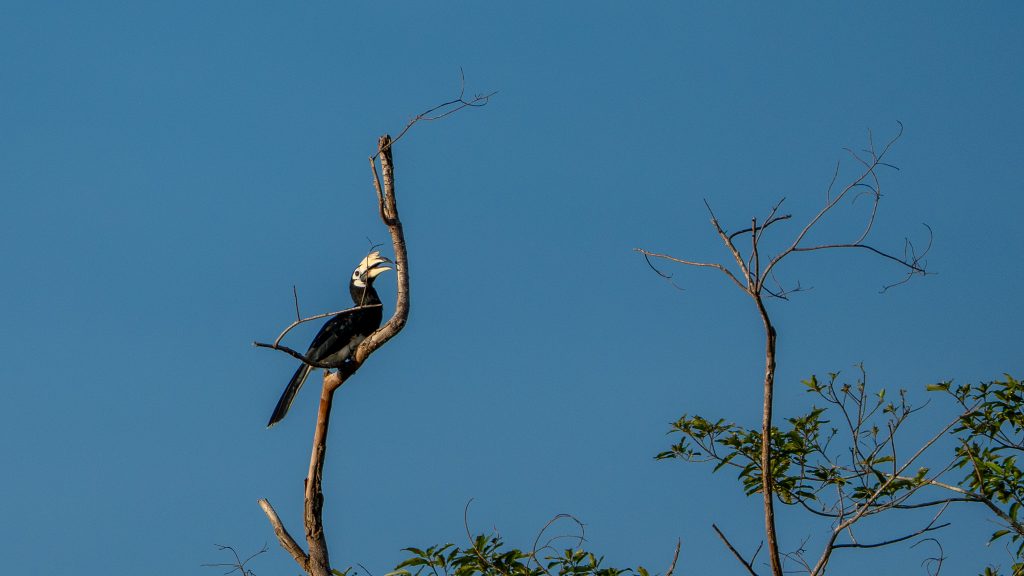
The Oriental Pied Hornbill (Anthracoceros albirostris) is one of the most fascinating birds you can encounter while exploring the rainforests of Borneo. With its striking black-and-white plumage and oversized ivory-colored bill topped by a distinctive casque, this remarkable bird is often considered one of the symbols of Southeast Asia’s tropical forests.
If you’re planning a wildlife adventure with Sebangau Tour, spotting an Oriental Pied Hornbill is an unforgettable experience that adds excitement to every river cruise and jungle trek.
What is the Oriental Pied Hornbill
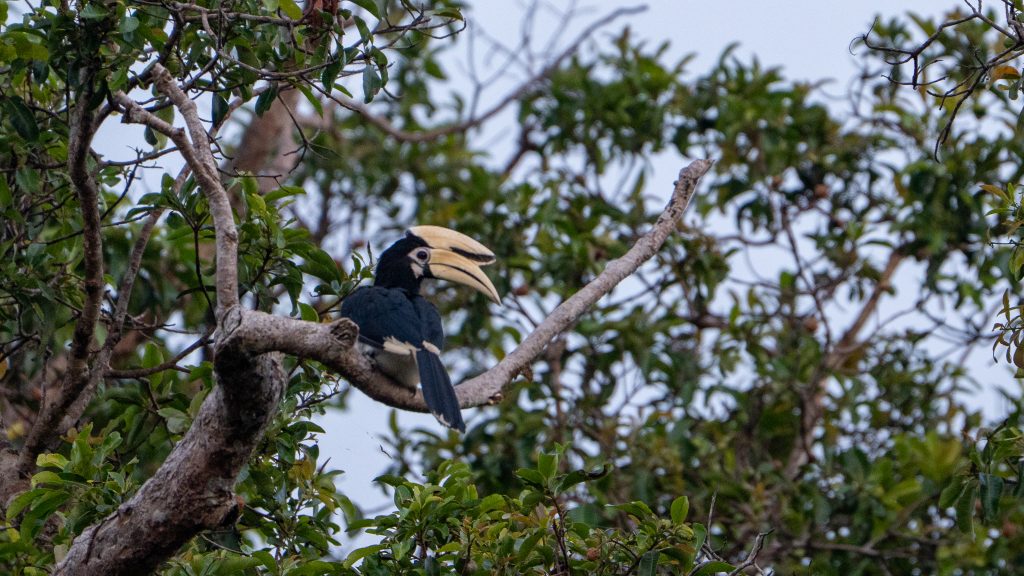
The Oriental Pied Hornbill is a medium-sized hornbill species found throughout Southeast Asia, including Indonesia, Malaysia, Thailand, Myanmar, and the Philippines. In Borneo, it inhabits lowland rainforests, mangrove forests, riverine woodlands, and even secondary forests.
Unlike many birds, hornbills play a vital ecological role by dispersing seeds across the forest, helping regenerate the rainforest naturally.
Quick Facts
- Scientific Name: Anthracoceros albirostris
- Family: Bucerotidae
- Length: 55–65 cm
- Diet: Fruits, figs, insects, lizards, and small animals
- Lifespan: Up to 20 years in the wild
- Conservation Status: Least Concern (IUCN)
Where Can You Find Oriental Pied Hornbills in Borneo?
Borneo offers some of the best opportunities to observe Oriental Pied Hornbills in their natural habitat.
Popular locations include:
- Sebangau National Park
- Tanjung Puting National Park
- Lamandau Wildlife Reserve
- Riverine forests throughout Central Kalimantan
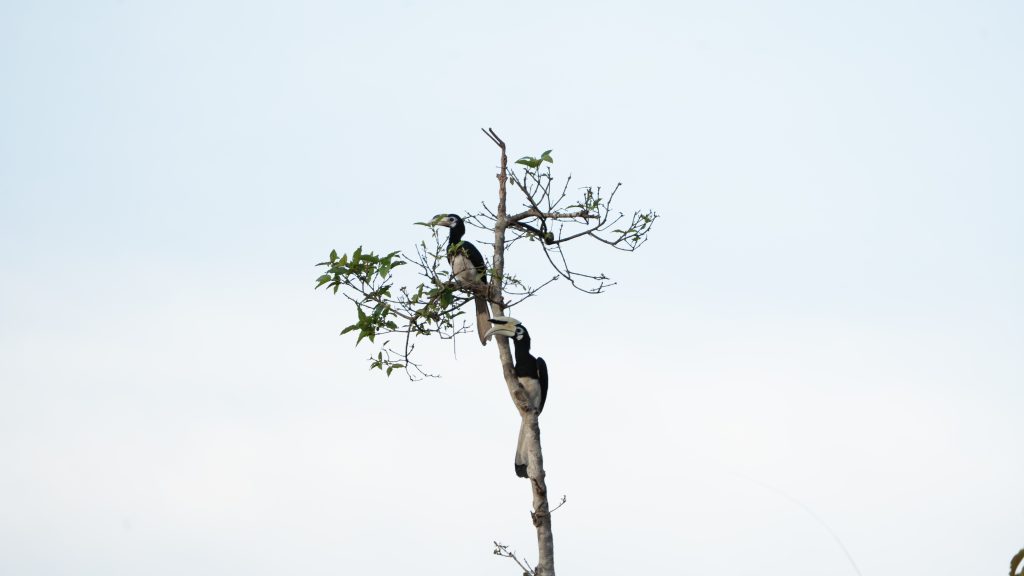
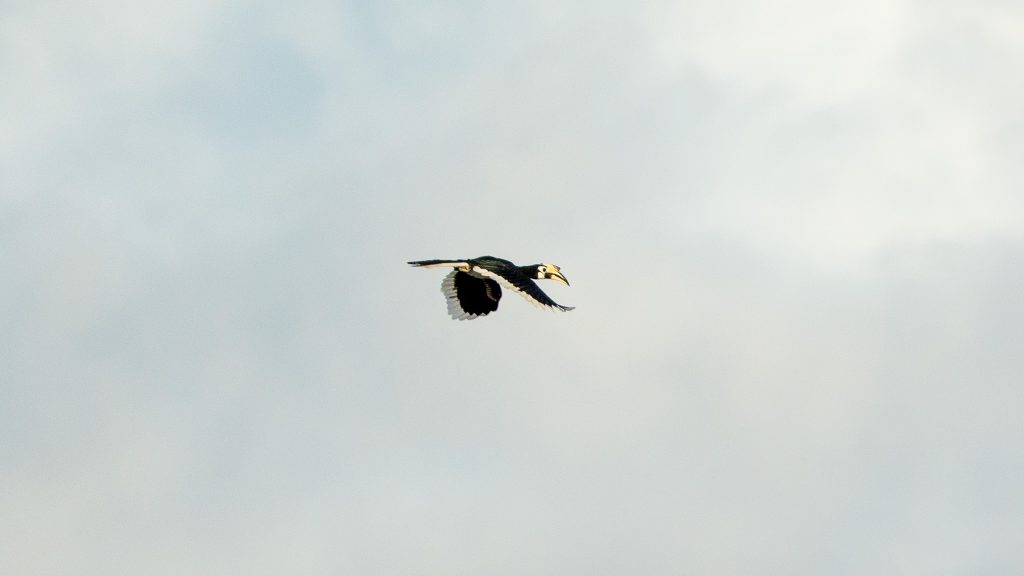
Visitors joining Sebangau Tour often spot these birds flying gracefully above the river or perched high in towering rainforest trees.
Early morning and late afternoon are generally the best times for sightings, when hornbills become more active in search of food.
Unique Features of the Oriental Pied Hornbill
1. Their Remarkable Bill
The bird’s enormous bill may look heavy, but it is surprisingly lightweight because it contains many air-filled cavities. The casque on top of the bill helps amplify calls and may also play a role in attracting mates.
2. Excellent Seed Dispersers
Oriental Pied Hornbills mainly feed on fruit, especially figs. After eating, they travel long distances before depositing seeds, allowing new trees to grow far from the parent plant.
Because of this, conservationists often refer to hornbills as the “gardeners of the rainforest.”
3. Extraordinary Nesting Behavior
One of the most amazing behaviors of hornbills is their nesting strategy.
When breeding, the female seals herself inside a tree cavity using mud, fruit pulp, and droppings, leaving only a narrow slit. During this period, the male delivers food through the small opening for several weeks until the chicks are ready to emerge.
This unique adaptation protects the family from predators.
What Do Oriental Pied Hornbills Eat?
Although they are primarily fruit eaters, their diet is surprisingly varied.
Their favorite foods include:
- Wild figs
- Forest berries
- Small fruits
- Insects
- Beetles
- Grasshoppers
- Small reptiles
- Frogs
- Occasionally small birds
Seasonal fruit availability strongly influences where hornbills travel within the forest.
Why Are Oriental Pied Hornbills Important?
Hornbills are considered a keystone species because many rainforest trees depend on them for seed dispersal.
Without hornbills:
- Forest regeneration slows.
- Biodiversity decreases.
- Many tree species struggle to reproduce.
- Wildlife habitats become less healthy over time.
Protecting hornbills helps protect the entire rainforest ecosystem.
Best Time to See Oriental Pied Hornbills
Hornbills can be observed throughout the year in Sebangau National Park.
However, visitors generally enjoy the best birdwatching conditions during the dry season, when river travel is easier and wildlife activity is often more visible.
Bringing binoculars and a camera with a telephoto lens greatly enhances the experience.
Birdwatching with Sebangau Tour
Sebangau National Park is not only famous for its wild orangutans but also for its incredible bird diversity.
Joining a guided wildlife tour gives visitors the opportunity to observe:
- Oriental Pied Hornbills
- Kingfishers
- Eagles
- Storks
- Herons
- Bee-eaters
- Numerous endemic rainforest birds
Experienced local guides know where hornbills frequently feed and nest, increasing your chances of memorable wildlife encounters while ensuring minimal disturbance to the animals.
Conservation Challenges
Although the Oriental Pied Hornbill is currently listed as a species of Least Concern, it still faces several threats:
- Deforestation
- Illegal logging
- Habitat fragmentation
- Forest fires
- Wildlife trade
Supporting responsible ecotourism helps protect critical habitats while providing economic benefits to local communities committed to conservation.
Experience Borneo’s Incredible Birdlife
The Oriental Pied Hornbill is far more than just a beautiful bird—it is an essential part of Borneo’s rainforest ecosystem. Watching one soar above the forest canopy or hearing its distinctive calls echo through the jungle is an experience that stays with visitors long after their journey ends.
If you’re planning a wildlife adventure in Central Kalimantan, don’t miss the opportunity to explore Sebangau National Park with Sebangau Tour. Alongside orangutans, proboscis monkeys, and other rainforest wildlife, the Oriental Pied Hornbill is one of the park’s most rewarding sightings.
Whether you’re a birdwatcher, wildlife photographer, or nature enthusiast, a trip into Borneo’s rainforest promises unforgettable encounters with one of Southeast Asia’s most iconic birds.
Frequently Asked Questions (FAQ)
Is the Oriental Pied Hornbill endangered?
No. It is currently classified as Least Concern by the IUCN, although habitat loss remains a significant threat in some regions.
What is special about the Oriental Pied Hornbill?
Its large casque, unique nesting behavior, and important role in dispersing rainforest seeds make it one of Borneo’s most remarkable birds.
Can tourists see Oriental Pied Hornbills in Sebangau National Park?
Yes. Visitors regularly observe Oriental Pied Hornbills during river cruises and jungle treks with experienced local guides.
Why are hornbills important to rainforests?
Hornbills disperse seeds over long distances, helping maintain healthy forests and supporting biodiversity across tropical ecosystems.