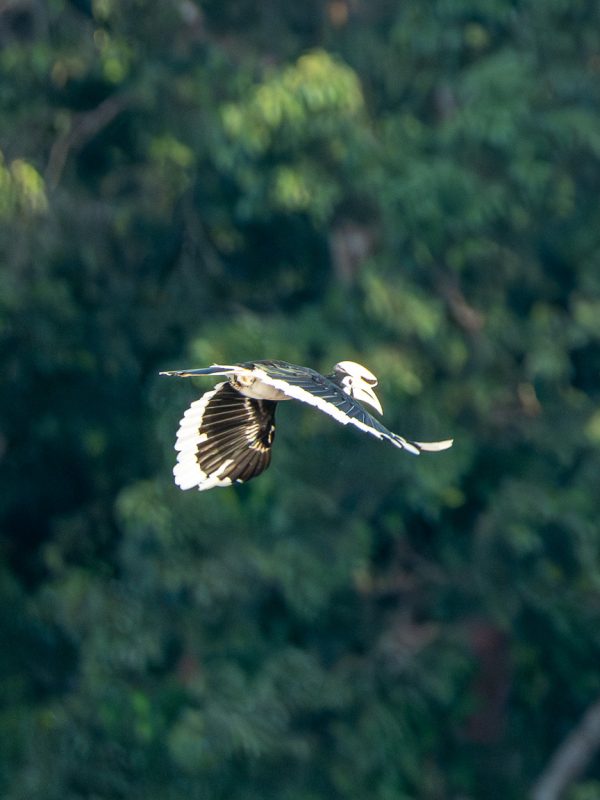
There is something different about photographing wildlife in Sebangau National Park.
It is not a place where you drive along a road and stop whenever an animal appears. There are no open savannahs where wildlife can easily be seen from a distance.
Instead, Sebangau is a vast tropical peat-swamp forest where rivers, blackwater streams, dense vegetation and ancient trees create a constantly changing environment.
Sometimes you photograph from a boat.
Sometimes you walk quietly through the forest.
Sometimes you simply stand still and wait.
And sometimes, after hours of looking, you get only one brief opportunity—a bird crossing the river, a monkey moving through the canopy, or an orangutan appearing between the leaves.
For wildlife photographers, that unpredictability is part of what makes Sebangau special.
Why Sebangau National Park Is Interesting for Wildlife Photography
Sebangau National Park protects one of the important remaining peat-swamp forest ecosystems in Central Kalimantan.
The environment is very different from the dry forests and open landscapes that many people associate with wildlife photography.
Here, water is everywhere.
Rivers and small streams cut through the forest. Tall trees rise from the peat. Dense vegetation grows along the waterways, while the forest floor can become wet and difficult to walk through during periods of high rainfall.
This creates a variety of photographic environments within one destination.
You can photograph:
- Orangutans in the canopy
- Proboscis monkeys near waterways
- Long-tailed macaques
- Kingfishers and other forest birds
- Hornbills
- Raptors and other birds of prey
- Reptiles and amphibians
- Insects and other small creatures
- Giant rainforest trees
- Peat-swamp landscapes
- Blackwater rivers and reflections
- Local boats and forest life
The result is that a trip to Sebangau does not have to be focused on finding one particular animal.
The forest itself becomes part of the story.
The Best Way to Photograph Wildlife in Sebangau
There is no single “best” way to photograph wildlife in Sebangau.
The best approach depends on the habitat, the animal you are looking for and the conditions on the day.
Generally, wildlife photography can be divided into several approaches.
1. Wildlife Photography from a Boat
For many visitors, the boat is the first introduction to Sebangau.
Rivers and waterways provide natural openings through the forest and allow you to cover more distance without disturbing the forest floor.
From the boat, keep your eyes on the trees along the riverbank.
Proboscis monkeys may sit in riverside trees. Birds may use branches above the water as hunting perches. Macaques may move through the vegetation.
And, with luck, you may see an orangutan somewhere high in the canopy.
Boat photography also gives you something that is difficult to reproduce elsewhere: the opportunity to photograph wildlife together with the blackwater river and rainforest landscape.
Instead of simply taking a close-up portrait, try including the surrounding environment.
That tells a much stronger story about where the animal actually lives.
2. Wildlife Photography on Forest Trails
Not everything in Sebangau is photographed from the water.
Walking through the forest provides an entirely different experience.
The pace becomes slower.
You notice small movements that would be easy to miss from a boat.
A leaf moving in the understory might reveal an insect. A bird may call from somewhere above. A lizard may disappear between tree roots.
For photographers, walking also provides opportunities to photograph details of the ecosystem itself.
Look for:
- Tree roots
- Mushrooms
- Insects
- Spiders
- Butterflies
- Forest flowers
- Peatland vegetation
- Fallen trees
- Animal tracks
- Small reptiles and amphibians
Macro and environmental photography can be just as rewarding as photographing large mammals.
3. Photographing Orangutans
Orangutans are one of the main reasons wildlife photographers come to Borneo.
Sebangau is an important orangutan habitat, but seeing one should never be treated as guaranteed.
They can spend much of their time high in the canopy, surrounded by leaves and branches.
This creates a challenge for photographers.
A long lens is extremely useful, but equipment alone does not solve the problem.
You need to learn to look for movement.
A branch bending.
Leaves shaking.
An unusual shape among the foliage.
Sometimes you hear an animal before you see it.
When an orangutan finally appears, avoid rushing toward it simply to obtain a closer photograph.
A photograph showing an orangutan surrounded by its natural forest habitat can be far more meaningful than a tight portrait.
4. Photographing Proboscis Monkeys
Proboscis monkeys are another fascinating subject, particularly around waterways.
Their distinctive appearance makes them one of the most recognizable primates of Borneo.
Look for them in trees near rivers and other wet habitats.
Early morning and late afternoon can provide beautiful light, especially when the animals are sitting against open areas of sky or vegetation.
Try photographing behavior rather than just faces.
A mother with a young animal, grooming, feeding, jumping between branches or a group resting together can create a much more interesting wildlife story.
5. Bird Photography in Sebangau
Bird photography can be one of the most rewarding activities in the park.
Sebangau’s forest supports a diverse bird community, including kingfishers, hornbills and many smaller forest species.
The challenge is that tropical forest birds can be incredibly difficult to photograph.
They are small.
They move quickly.
And the forest background can be very dark.
A telephoto lens with good autofocus can help, but learning to listen is equally important.
Often, you hear a bird before you see it.
Instead of constantly walking, stop and listen.
Find where the calls are coming from.
Look for branches that provide good perches.
Then wait.
Sometimes the best wildlife photographs come from standing still rather than moving continuously.
6. Look Down, Not Only Up
Wildlife photographers naturally spend a lot of time looking into the trees.
But some of the most interesting subjects are at ground level.
Sebangau’s humid environment can support an enormous variety of small creatures.
Look carefully for:
- Frogs
- Lizards
- Snakes
- Spiders
- Dragonflies
- Butterflies
- Beetles
- Caterpillars
- Fungi
- Small plants
After rain, these subjects can become particularly interesting.
Wet leaves can create natural reflections and colors become more intense.
For macro photographers, a rainy forest can be more exciting than a sunny one.
Why the Wet Season Is the Best Time to Visit Sebangau
If wildlife photography is your main reason for visiting Sebangau National Park, we recommend the wet season as the best overall time to visit.
This is an important point because Sebangau is a peat-swamp ecosystem.
Water is fundamental to the landscape.
During wetter periods, rivers and waterways become an even more important part of the experience, while the forest takes on a completely different character.
For photographers, the wet season can provide:
- Richer forest colors
- Dark, reflective blackwater
- Misty mornings
- Dramatic clouds
- Interesting reflections
- Wet foliage
- Atmospheric forest scenes
- Excellent opportunities for environmental wildlife photography
And importantly, “wet season” does not mean that it rains every minute of every day.
Tropical weather can change quickly.
A period of rain may be followed by clear skies, soft light or a dramatic sunset.
For photography, those changing conditions can actually be an advantage.
Photography After Rain
Do not automatically pack away your camera when the rain starts.
Some of the best photographs can happen immediately afterward.
The forest becomes wet and reflective.
Drops remain on leaves and spider webs.
Mist may appear above the water.
The sky can become dramatic.
Animals may also become active again once the rain passes.
This is particularly useful for photographers who want something more atmospheric than a standard wildlife portrait.
A photograph of a small frog sitting on a wet leaf, for example, can tell a very different story from a photograph taken under harsh midday sunlight.
Morning: Start Early
Early morning is generally one of the best periods for wildlife photography.
The temperature is cooler, the forest is quieter and the light is softer.
Morning light can also create beautiful layers between the river, vegetation and distant trees.
If you are photographing from a boat, the surface of the water may be particularly calm.
If you are walking, the forest can feel completely different before the day’s heat builds up.
Bring your camera out before the sun becomes strong.
You may be surprised by what appears.
Afternoon and Golden Hour
Late afternoon provides another excellent photography window.
The light becomes warmer and softer.
Wildlife may become active again after the heat of the middle of the day.
If the weather is partly cloudy, sunlight can break through gaps in the canopy and create interesting patches of light.
This is also a good time to photograph the environment rather than only individual animals.
Try wider compositions showing:
animal + tree + river + sky.
These photographs often communicate the scale and atmosphere of Sebangau much better than a close-up portrait.
What Camera Gear Should You Bring?
You do not need the most expensive camera to photograph wildlife in Sebangau.
A practical setup is more important.
Telephoto Lens
A lens around 100–400mm or a similar range is highly versatile.
It allows you to photograph animals that are relatively close while still providing enough reach for wildlife high in the trees.
Wide-Angle Lens
Do not forget a wide lens.
Wildlife photography is not always about getting closer.
A wide-angle photograph can show an animal in its entire environment and communicate the character of the peat-swamp forest.
Macro Lens
If you enjoy small subjects, a macro lens can open another world.
Sebangau is full of tiny photographic opportunities.
Rain Protection
This is particularly important because we recommend visiting during the wet season.
Bring:
- Camera rain cover
- Waterproof backpack or dry bag
- Lens cloth
- Microfiber towel
- Extra batteries
- Extra memory cards
- Silica gel
A simple waterproof bag can sometimes be just as important as an expensive lens.
Don’t Forget the Human Element
Sebangau is not only about wildlife.
People are part of the landscape too.
Boats moving through blackwater rivers, local communities, guides walking through the forest and the relationship between people and the peatland can all become part of your photographic story.
Responsible documentary photography can help communicate why these forests matter.
Instead of photographing Sebangau simply as a place where rare animals live, think about photographing it as a complete ecosystem.
Forest. Water. Wildlife. People.
Together, they tell a much bigger story.
Wildlife Photography Is About Patience
One of the biggest differences between wildlife photography and ordinary travel photography is that you cannot control your subject.
You cannot ask a kingfisher to sit on the perfect branch.
You cannot ask an orangutan to move into better light.
You cannot tell a monkey to look toward your camera.
You wait.
You observe.
You adapt.
Sometimes you return with hundreds of photographs.
Sometimes you return with only a few.
And sometimes you return without the photograph you wanted.
That does not necessarily mean the trip was unsuccessful.
You were still inside one of Borneo’s remarkable peat-swamp forests.
Photograph the Moment, Not Just the Animal
The best wildlife photograph is not necessarily the closest one.
A technically perfect portrait is impressive, but a photograph can become much more powerful when it communicates a moment or a place.
An orangutan disappearing into the canopy.
A proboscis monkey jumping between riverside trees.
A kingfisher reflected in blackwater.
A hornbill flying across the morning sky.
A frog sitting on a rain-covered leaf.
A boat disappearing into the forest after rain.
These photographs tell stories.
And ultimately, that is what wildlife photography in Sebangau is about.
Final Thoughts
Sebangau National Park offers a very different kind of wildlife photography experience.
You are not simply searching for animals.
You are entering a complex peat-swamp ecosystem where water, forest and wildlife are closely connected.
You might photograph from a boat.
You might walk through the forest.
You might spend an hour waiting for a bird.
Or you might stop to photograph something as small as a frog or spider.
The important thing is to slow down and pay attention.
And if you are choosing when to visit, the wet season is our recommended time for experiencing Sebangau National Park at its best.
The rain is part of the ecosystem.
The water is part of the landscape.
And for photographers, those wet conditions can create some of the most atmos