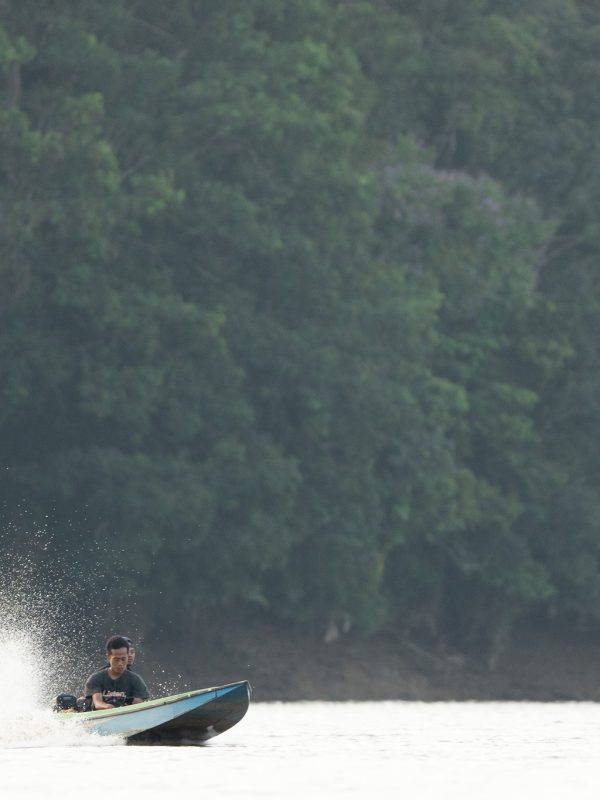
The Katingan River is one of the great rivers of Central Kalimantan, Indonesia. Flowing through vast forests, peatlands, wetlands, and traditional communities, the river is an important part of both the natural environment and everyday life in Central Kalimantan.
For travelers exploring Sebangau National Park and the surrounding areas, the Katingan River offers a different perspective of Borneo. Instead of simply being a route from one destination to another, the river itself becomes part of the journey—revealing wildlife, forests, villages, and landscapes that are difficult to experience from the road.
Where Is the Katingan River?
The Katingan River, locally known as Sungai Katingan, flows through Central Kalimantan on the Indonesian island of Borneo.
Its watershed covers a large area of the province, beginning in the mountainous interior before flowing generally southward toward the Java Sea. Along its journey, the river passes through forests, peatlands, agricultural areas, and settlements.
One of the most important places associated with the river is Kasongan, the capital of Katingan Regency. The town is located along the river and serves as an important center for communities living in the surrounding region.
Further downstream, the Katingan River reaches the coastal lowlands, where its freshwater system connects with extensive wetlands and coastal ecosystems.
Why Is the Katingan River Important?
Rivers are fundamental to life in Borneo, and the Katingan is no exception.
For generations, communities along the river have depended on it for transportation, fishing, agriculture, and access to surrounding forests.
The river also plays an important ecological role.
Its watershed connects different types of habitats, including:
- Tropical rainforest
- Peat swamp forest
- Freshwater wetlands
- Riverine forest
- Agricultural landscapes
- Coastal and estuarine environments
These habitats support a remarkable variety of plants and animals.
The Katingan River is therefore not just a geographical feature. It is part of a much larger ecological system that connects the interior forests of Central Kalimantan with the lowlands and coast.
The Katingan River and Peatland Ecosystems
One of the most interesting aspects of the Katingan landscape is its connection with peatlands.
Central Kalimantan contains some of the world’s most extensive tropical peatlands. These wetlands store enormous amounts of carbon and provide habitat for many species.
Peat swamp forests can look deceptively simple from a boat. The landscape may appear flat, dark, and dominated by water and trees. But beneath the surface lies a deep layer of partially decomposed organic material accumulated over thousands of years.
Healthy peatlands help regulate water, store carbon, and provide habitat for wildlife.
This is particularly important in Central Kalimantan, where peatland conservation has become a major part of environmental protection.
Wildlife Along the Katingan River
Traveling by river is one of the best ways to experience the wildlife of Borneo.
The forest along the Katingan River provides habitat for many species, although wildlife sightings are naturally unpredictable.
Depending on the location and season, visitors may encounter birds, reptiles, monkeys, and other animals along the riverbanks.
Proboscis Monkeys
The proboscis monkey (Nasalis larvatus) is one of the most iconic primates of Borneo.
These monkeys are strongly associated with riverine and wetland habitats. Early morning and late afternoon can be particularly interesting times to look for them, when groups may be active around trees close to the water.
Orangutans
Central Kalimantan is one of the most important regions in the world for wild orangutans.
The Bornean orangutan (Pongo pygmaeus) depends on forest habitat, including areas associated with river systems.
Seeing an orangutan from a boat can be a memorable experience: a flash of orange fur high in the canopy, often only visible for a few seconds before disappearing among the leaves.
However, unlike some areas where orangutans are relatively habituated to visitors, sightings along natural river habitats should never be guaranteed.
Hornbills
The forests surrounding the Katingan River are also home to several species of hornbill.
Birdwatchers may encounter species such as:
- Rhinoceros Hornbill
- Oriental Pied Hornbill
- Black Hornbill
- Bushy-crested Hornbill
Their large size, distinctive calls, and powerful flight make hornbills some of the most impressive birds to encounter in Borneo.
Other Wildlife
The river and surrounding forests may also support:
- Long-tailed macaques
- Pig-tailed macaques
- Monitor lizards
- Kingfishers
- Egrets and herons
- Brahminy kites
- Crocodiles
- Various species of frogs and reptiles
- Numerous insects and forest birds
Wildlife encounters are one of the attractions of exploring the river, but the experience is best approached as a wildlife search rather than a guaranteed wildlife show.
A River Surrounded by Traditional Communities
The Katingan River is also a cultural landscape.
Many communities in the region have a long relationship with the river and surrounding forests. Traditional knowledge about fishing, plants, forests, and seasonal changes has been passed down through generations.
For local people, a river can function as a road, food source, water resource, and connection between communities.
This makes traveling along the Katingan River an opportunity to see a side of Central Kalimantan that is very different from the major tourist destinations.
Instead of seeing only forests and wildlife, visitors can also observe everyday life along the river:
- Traditional wooden houses
- Small boats and river transportation
- Fishing activities
- Riverside villages
- Local agriculture
- Traditional forest products
This interaction between people and landscape is an important part of understanding Borneo.
Exploring the Katingan River by Boat
The most natural way to experience the river is from the water.
A boat journey allows travelers to move slowly through the landscape while observing the forest and riverbanks.
Early morning is often a beautiful time to be on the river.
The air is cooler, the water can be calm, and birds and monkeys may be more active. As the sun rises above the forest, the atmosphere can change dramatically.
Late afternoon offers another memorable experience, particularly when the river reflects the colors of the sunset.
For photographers, the river provides opportunities to photograph not only wildlife but also:
- Reflections on the water
- Riverbank forests
- Traditional boats
- Riverside villages
- Misty mornings
- Tropical sunsets
- Birds in flight
Katingan River vs. Sebangau River
Travelers sometimes confuse the Katingan River with the Sebangau River because both are located in Central Kalimantan and are associated with peat swamp landscapes.
They are, however, different river systems.
The Sebangau River is closely associated with Sebangau National Park, particularly the southern and western parts of the park. It is an important access route for exploring the park’s peat swamp ecosystem.
The Katingan River, meanwhile, belongs to the much larger Katingan watershed and extends far beyond the national park.
The two landscapes share many ecological characteristics, particularly their peatland environments, but they offer different travel experiences.
For visitors interested specifically in Sebangau National Park, the Sebangau River and park access points are generally more directly relevant.
For travelers interested in understanding the broader landscape of Central Kalimantan, the Katingan River provides a fascinating additional destination.
When Is the Best Time to Visit the Katingan River?
Central Kalimantan has a tropical climate, so the Katingan River can be visited throughout much of the year.
However, river conditions and wildlife activity can change depending on rainfall and water levels.
The dry season can provide easier conditions for some activities, while the wetter months can bring higher river levels and a different character to the landscape.
There is also no single “best” month for wildlife.
If your main goal is wildlife photography, it is more important to allow enough time in the forest and remain flexible than to depend entirely on a particular month.
Is the Katingan River Worth Visiting?
For travelers looking beyond the classic Borneo destinations, the answer is yes.
The Katingan River offers something that is increasingly difficult to find: a chance to experience a large tropical river system where nature and local life remain closely connected.
It is particularly interesting for travelers who enjoy:
- Wildlife watching
- Birdwatching
- Photography
- River journeys
- Tropical forests
- Indigenous and local culture
- Responsible tourism
- Less-developed destinations
It is also an excellent destination for travelers who want to understand that Borneo is more than just orangutans.
The forests, rivers, wetlands, communities, and wildlife are all part of one interconnected landscape.
Responsible Travel on the Katingan River
The Katingan landscape is ecologically sensitive, particularly its peat swamp forests.
Visitors can help protect the area by following simple principles:
Do not litter. Take all waste back with you.
Do not disturb wildlife. Keep a respectful distance and avoid loud noises.
Do not feed wild animals. Feeding can change natural behavior and create problems for both wildlife and people.
Support local communities. Whenever possible, use local guides, boats, accommodation, and services.
Respect local culture. Ask permission before photographing people, homes, or cultural activities.
Responsible tourism can help ensure that the river remains valuable to both local communities and future generations.
Discover the Rivers of Central Kalimantan
The Katingan River represents one of the many natural treasures of Central Kalimantan.
From the forests of the interior to the wetlands of the lowlands, the river connects landscapes, wildlife, and communities over hundreds of kilometers.
For visitors exploring Sebangau National Park, learning about the Katingan River also provides a broader understanding of the region’s peatland ecosystem and the importance of protecting Central Kalimantan’s remaining forests.
A journey through Borneo is not only about reaching a particular destination.
Sometimes, the river is the destination.