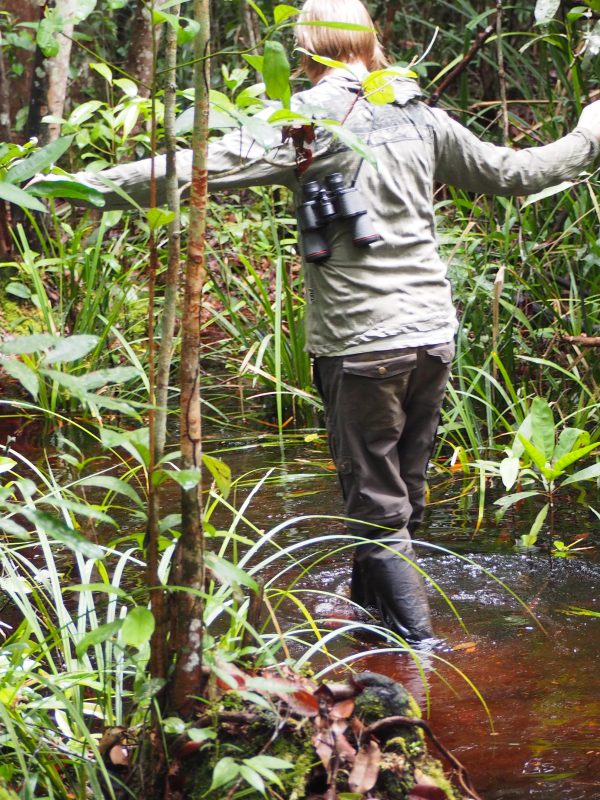
Before your boat slowly enters the dark, calm waters of Sebangau National Park, you might notice something unusual.
The river looks almost black. The forest feels quiet. The ground beneath the trees is soft, wet, and alive.
This is your first encounter with a peat swamp forest — one of the most unique and important ecosystems on Earth.
Understanding what a peat swamp forest is will not only enrich your journey, but also help you travel more responsibly while exploring Sebangau.
So, What Exactly Is a Peat Swamp Forest?
A peat swamp forest is a forest that grows on deep layers of peat soil, created from dead plants and trees that have accumulated over thousands of years in permanently wet conditions.
Because the forest floor is always waterlogged, plant material does not fully decompose. Instead, it slowly builds up, forming thick layers of peat — sometimes reaching several meters deep.
In Sebangau, these peat layers are ancient. Some have been forming since long before modern human civilization existed.
Why Does Peat Feel Different Under Your Feet?
If you ever step off a boat or walk along a boardwalk in Sebangau, you may notice the ground feels:
- Soft and spongy
- Damp, even during dry seasons
- Fragile and easily disturbed
That’s because peat soil is made mostly of organic material and stores enormous amounts of carbon. In fact, peat swamp forests store more carbon than most tropical rainforests.
This makes Sebangau not just beautiful — but globally important.
What Makes Sebangau’s Peat Swamp Forest So Special?
Sebangau National Park protects one of the largest remaining intact peat swamp forests in Southeast Asia.
As you travel deeper into the park, this unique ecosystem supports:
- One of the world’s largest wild orangutan populations
- Proboscis monkeys, sun bears, hornbills, and rare bird species
- Slow-moving blackwater rivers, colored naturally by forest vegetation
Every sound, movement, and reflection in the water tells a story of a forest that survives because it remains wet, undisturbed, and protected.
Is Visiting a Peat Swamp Forest Safe for Travelers?
Yes — and incredibly rewarding.
Exploring Sebangau is different from hiking a mountain or walking through a city park. Most journeys happen:
- By traditional boat along the river
- On wooden boardwalks above the peat soil
- With experienced local guides who understand the forest
Guided travel is essential here, not only for safety, but to protect the ecosystem. Peat forests are resilient when respected — and vulnerable when disturbed.
Why Travelers Should Understand Peat Forests Before Visiting Sebangau
Knowing what a peat swamp forest is helps you:
- Understand why fires are extremely dangerous in peat areas
- Appreciate why visitors must stay on designated paths
- Respect wildlife habitats and conservation rules
- Experience Sebangau as more than a photo destination
Sebangau is a place for travelers who value learning, nature, and sustainability over crowds and convenience.
Peat Swamp Forests, Climate, and Your Visit
Peat forests are one of nature’s most powerful tools against climate change. When protected, they:
- Lock carbon safely underground
- Regulate water systems
- Reduce flood and drought risks
By visiting Sebangau responsibly, you are supporting conservation efforts that protect this forest — and the planet.
What to Expect When Exploring Sebangau National Park
Travelers often describe Sebangau as:
- Quiet, peaceful, and deeply immersive
- A place where wildlife encounters happen naturally
- A destination that encourages slowing down and observing
This is not mass tourism. It is meaningful travel.
Final Thoughts: Walking Gently Through an Ancient Forest
A peat swamp forest is not just something you walk through — it’s something you learn from.
When you understand what lies beneath the forest floor in Sebangau, every moment feels more meaningful. Each paddle stroke, bird call, and rustling leaf becomes part of a much larger story — one that connects you to nature, conservation, and time itself.