Sebangau National Park — one of Borneo’s richest biodiversity hotspots — isn’t just home to iconic orangutans and hornbills. Hidden within the lush peat swamp forests and along the waterways of Danau Punggualas lies a fascinating world of reptiles, especially snakes. For nature lovers, photographers, and wildlife adventurers exploring Sebangau, understanding these serpentine residents offers both insight and safety.
In a reptile inventory conducted by reptile experts along the Punggualas river and lake areas, researchers recorded eight snake species from five different families. These range from venomous cobras to non-venomous tree dwellers — each playing its role in the swamp ecosystem.
1. Equatorial Spitting Cobra (Naja sumatrana) — Venomous & Impressive
The Equatorial Spitting Cobra, locally known as Hanjaliwan, is one of the most notable venomous snakes in Sebangau. Capable of delivering a potent neurotoxic bite, this cobra is known for its hood display and spitting behavior when threatened. Sightings are more frequent near water channels later in the day.
Tips: Keep a respectful distance and avoid sudden movements if you spot this snake.
2. Painted Mock Viper (Psammodynastes pictus) — Small but Striking
Often mistaken for a true viper due to its patterns, the Painted Mock Viper is a mildly venomous snake that poses little danger to humans. Mostly active at night, it can be found along riverbanks resting on logs or low vegetation.


3. Large Green Snake (Gonyosoma oxycephalum) — Arboreal Beauty
Also called the Green Tree Snake, this non-venomous colubrid can grow up to 2.5 meters and prefers spending time high in the trees. Its bright green body and calm nature make it one of Sebangau’s most photogenic serpent species.
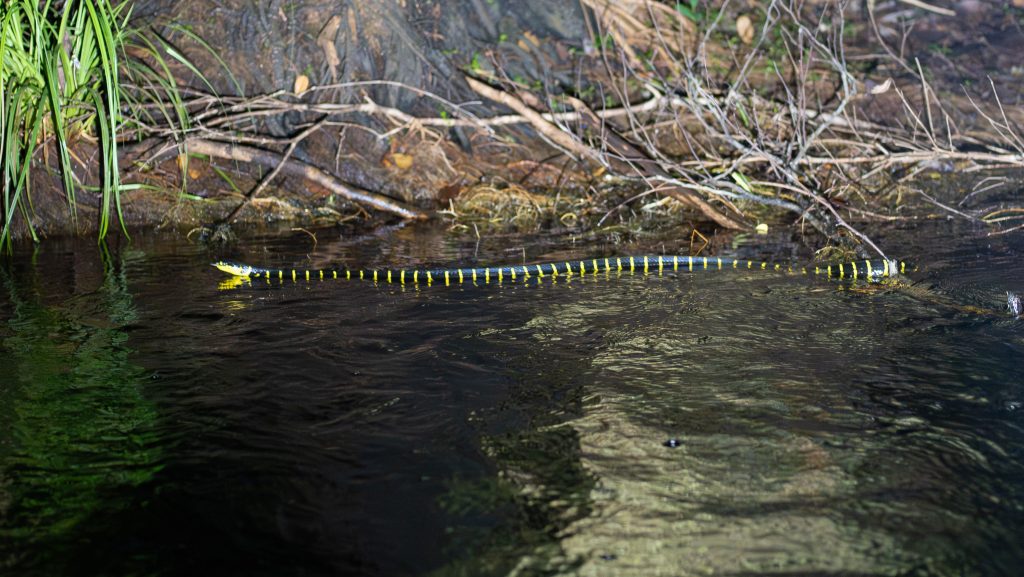
4. Mangrove Cat Snake (Boiga dendrophila) — Nocturnal Predator
The Mangrove Cat Snake is a nocturnal hunter known for its striking black and yellow bands. It has mild venom, but bites are rarely fatal to humans. This snake feeds on birds, small mammals, and occasionally other snakes.
5. Red-Segmented Keelback (Xenochrophis trianguligera)
A small, agile snake frequently spotted moving through grasses and shallow waters near Punggualas. Unlike the cobras, this species is non-dangerous and plays a vital role controlling frog, fish, and insect populations.

6. Reticulated Python (Python reticulatus) — Giant of the Swamp
Sebangau’s waterways are also home to the Reticulated Python — one of the largest snake species in the world. These powerful constrictors are non-venomous and typically avoid humans, focusing on prey like rodents and birds.

7. Eight-lined Kukri Snake (Oligodon octolineatus)
Small but fascinating, this kukri snake got its name from the blade-like shape of its rear teeth. It’s non-venomous and generally harmless to humans. Look for its contrasting stripes along forest edges and damp ground.
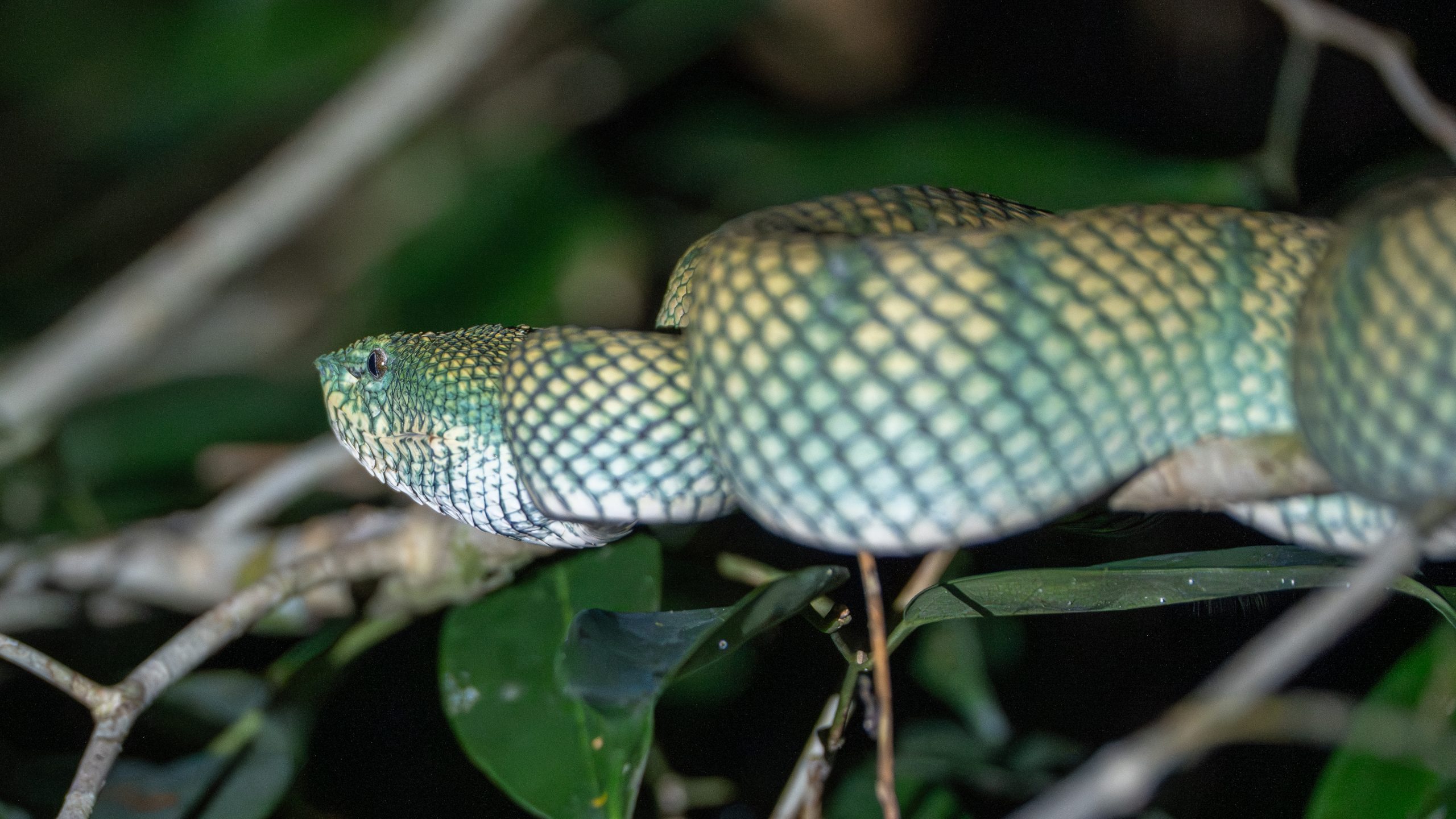
8. Bornean Keeled Pit Viper (Trimeresurus subannulatus)
One of the most eye-catching yet potentially dangerous snakes you may encounter in Sebangau National Park is the Bornean Keeled Pit Viper, locally known for its bright green coloration and ambush-hunting behavior. Although sightings are less frequent than some non-venomous species, this snake is an important part of Sebangau’s peat-swamp ecosystem.
More Herpetofauna in Sebangau
While snakes are the star focus for many visitors, Sebangau’s reptile diversity also includes other fascinating species like water monitors (Varanus salvator) and the black terrapin (Siebenrockiella crassicollis). Together, these reptiles help maintain the balance of the peat swamp ecosystem.
Tips for Spotting Snakes in Sebangau
Best times: Many snake species are nocturnal, so guided night tours increase your chance of sightings.
Stay on trails: Snakes often camouflage in leaf litter and grass.
Respect wildlife: Never attempt to touch or handle wild snakes.
Sebangau National Park is a must-visit destination for wildlife enthusiasts who want a deeper connection with nature — including its elusive serpentine residents. Whether you’re photographing a green tree snake sunning itself or documenting the powerful reticulated python, every encounter is a reminder of the hidden wonders of Borneo’s peatlands.
Planning your next adventure? Explore Sebangau with knowledgeable guides and uncover the secrets of the swamp — safely and responsibly!
