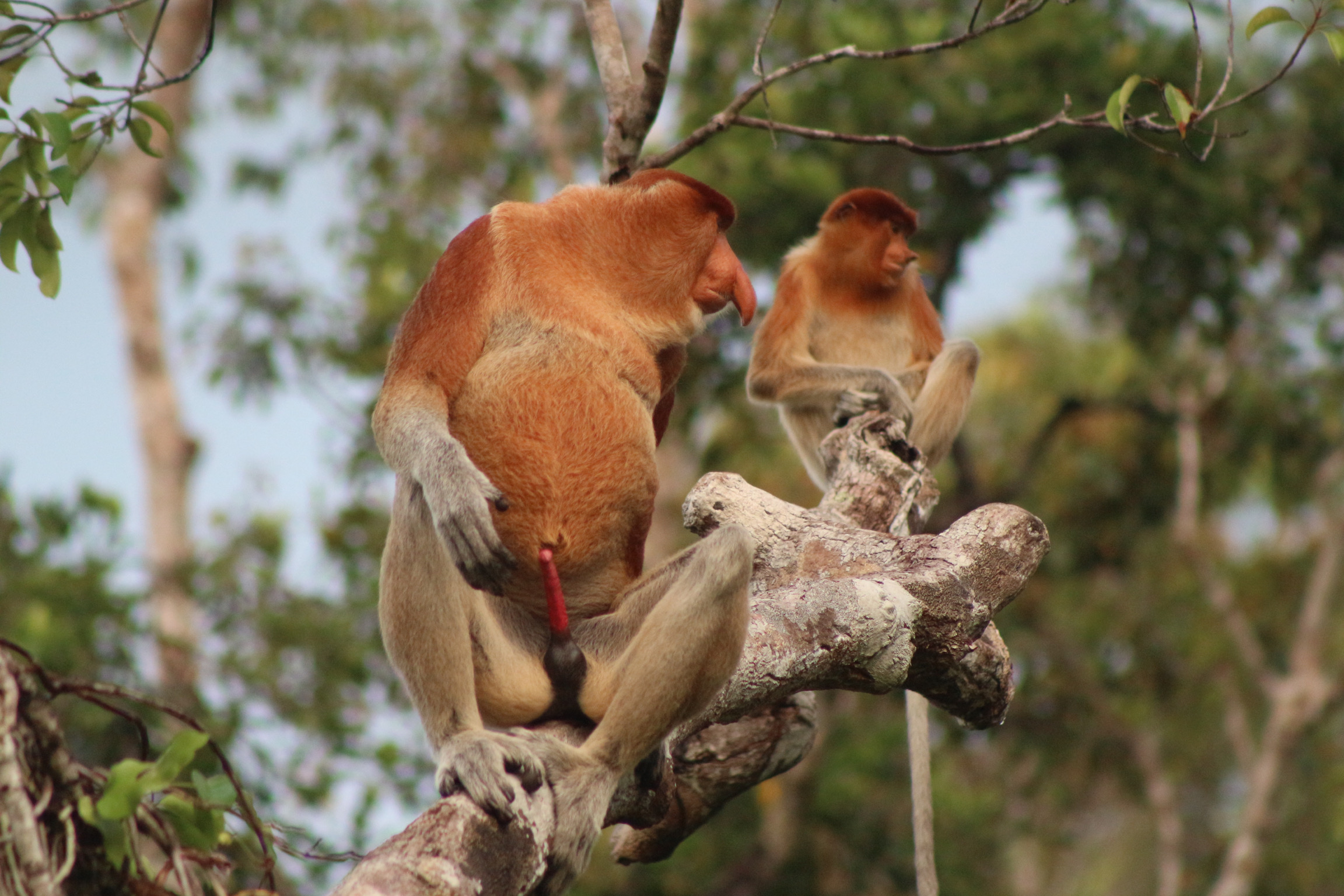
If you’re planning a trip to the wild heart of Borneo, there’s one animal you absolutely shouldn’t miss—the proboscis monkey.
With its long, distinctive nose and pot-bellied appearance, this primate might look a little unusual at first. But spend a few moments watching it leap through mangrove trees or swim across rivers, and you’ll quickly realize: this is one of the most fascinating creatures in the rainforest.
What Is a Proboscis Monkey?
The proboscis monkey (Nasalis larvatus), known locally as “bekantan,” is a species found only on the island of Borneo. That means you won’t see it anywhere else in the world—making your trip here even more special.
Key Characteristics:
- Long, prominent nose (especially in males)
- Reddish-brown fur
- Large belly due to its unique digestive system
- Excellent swimmer (yes, monkeys that swim!)
Male proboscis monkeys use their oversized noses to attract females and amplify their calls across the forest—nature’s very own loudspeaker.
Where Can You See Proboscis Monkeys?
Proboscis monkeys love wetlands—especially mangroves, riverbanks, and peat swamp forests.
One of the best places to encounter them is in Sebangau National Park, a vast tropical peatland near Palangka Raya.
Here’s why Sebangau is special:
- Less crowded than other wildlife destinations
- Rich biodiversity, including orangutans and birdlife
- Authentic jungle experience with local guides
You’ll often spot proboscis monkeys in the late afternoon, gathering near river edges before settling into trees for the night.
Why Do They Have Big Noses?
This is the question everyone asks—and the answer is both funny and scientific.
The large nose:
- Helps attract mates
- Enhances vocal calls
- Signals dominance among males
In short, the bigger the nose, the more impressive the monkey!
What Do Proboscis Monkeys Eat?
Unlike many monkeys that prefer fruit, proboscis monkeys are mostly leaf eaters.
Their diet includes:
- Young leaves
- Seeds
- Unripe fruits
Their multi-chambered stomach helps digest tough plant material—similar to cows. Because of this, they avoid sugary fruits, which can ferment and cause digestive issues.
Fun Fact: They Are Amazing Swimmers
Proboscis monkeys are one of the few primates that actually love water. They:
- Swim across rivers to escape predators
- Have partially webbed feet
- Can leap dramatically from trees into the water
Seeing one jump into a river during your tour? That’s a moment you’ll never forget.
Conservation Status: Why They Need Protection
Sadly, proboscis monkeys are endangered.
Main threats include:
- Habitat loss from deforestation
- Conversion of wetlands into plantations
- Hunting in some areas
Protected areas like Indonesia’s national parks play a crucial role in preserving their future.
When you visit responsibly, you’re directly supporting conservation efforts and local communities.
Tips for Spotting Proboscis Monkeys
Want the best chance to see them during your trip?
- Go at sunrise or sunset
- Take a river cruise
- Stay quiet and observant
- Travel with local guides
At Sebangau, many eco-tours are designed specifically to maximize wildlife encounters while respecting nature.
Why You Should Add This to Your Sebangau Trip
Seeing a proboscis monkey in the wild isn’t just about ticking off a checklist—it’s about experiencing one of Borneo’s most unique ecosystems.
Combine it with:
- Orangutan spotting
- Peat forest trekking
- River exploration
…and you’ve got a truly unforgettable adventure.
The proboscis monkey may look quirky, but it represents something much bigger: the incredible biodiversity of Borneo and the importance of protecting it.
So when you visit Sebangau, keep your eyes on the trees—and maybe the river too. You never know when a long-nosed monkey might steal the show.