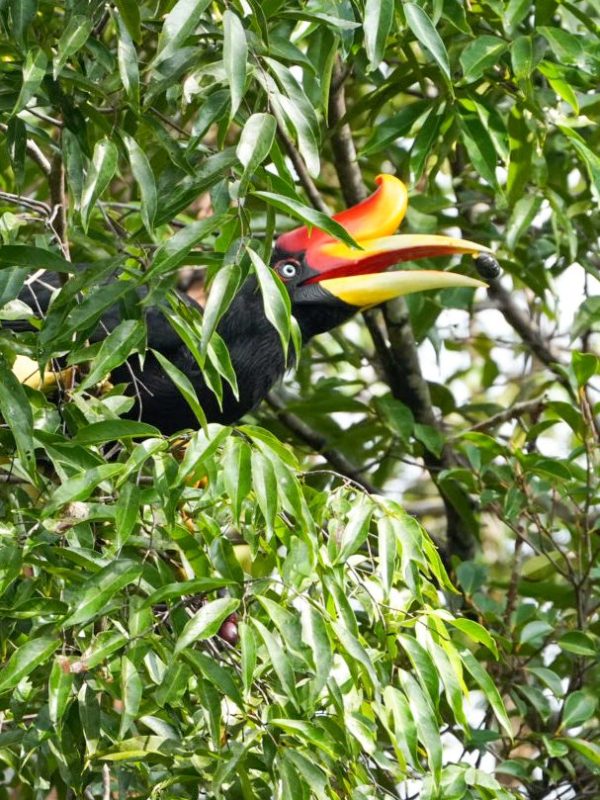
Introduction: Why Sebangau is a Hornbill Paradise
Sebangau National Park is one of Borneo’s most important peat swamp forests and a hidden gem for birdwatchers. Among its most iconic wildlife are hornbills—large, colorful birds known for their unique beaks and vital role in the rainforest ecosystem.
If you’re searching for hornbill birds in Borneo, Sebangau offers one of the best opportunities to see multiple species in one location.
What Are Hornbills?
Hornbills are tropical birds from the family Bucerotidae, easily recognized by their large curved bills and casque (a helmet-like structure on top of the beak).
They are often called the “gardeners of the forest” because they spread seeds across long distances, helping regenerate the rainforest.
How Many Hornbill Species Live in Sebangau?
Borneo is home to 8 hornbill species, and many of them can be found in Sebangau National Park. Below is a complete list of hornbills you may encounter during your visit.
1. Rhinoceros Hornbill (Buceros rhinoceros)
The Rhinoceros Hornbill is the most famous hornbill in Borneo and a symbol of the island’s wilderness.
Key features:
- Bright orange-red casque
- Black body with white tail
- Loud wingbeats you can hear in flight
Where to see: Forest canopy and near fruiting trees
2. Helmeted Hornbill (Rhinoplax vigil)
One of the rarest hornbills in the world, the Helmeted Hornbill is critically endangered.
Key features:
- Solid casque (unlike other hornbills)
- Long central tail feathers
- Loud, echoing “laughing” call
Status: Rare but possible in deep forest areas
3. Black Hornbill (Anthracoceros malayanus)
A common species in peat swamp forests like Sebangau.
Key features:
- Mostly black body
- White tail
- Pale bill with small casque
Best chance: Seen flying in pairs or small groups
4. Wrinkled Hornbill (Rhabdotorrhinus corrugatus)
A colorful and distinctive hornbill species.
Key features:
- Bright yellow throat (males)
- Wrinkled casque
- Medium-large size
Habitat: Dense lowland forest
5. Oriental Pied Hornbill (Anthracoceros albirostris)
One of the easiest hornbills to spot.
Key features:
- Black-and-white body
- Smaller casque
- Adaptable to forest edges
Best location: Rivers and open forest areas
6. Bushy-crested Hornbill (Anorrhinus galeritus)
A social and noisy hornbill species.
Key features:
- Dark plumage
- Bushy crest
- Moves in groups
Tip: Often heard before seen
7. White-crowned Hornbill (Berenicornis comatus)
A striking but shy species.
Key features:
- White head and crest
- Black body
- Quiet and elusive
Best chance: Deep primary forest
8. Wreathed Hornbill (Rhyticeros undulatus)
A large, wide-ranging hornbill.
Key features:
- Pale head
- Long flights over canopy
- Often travels in groups
Best Time to See Hornbills in Sebangau
For the best birdwatching experience:
- Time of day: Early morning (06:00 – 09:00)
- Best season: Dry season (May–September)
- Hotspot: Fruiting trees, especially figs
Birdwatching Tips for Sebangau National Park
To increase your chances of spotting hornbills:
- Bring binoculars or a zoom camera
- Listen for wing sounds and calls
- Hire a local guide who knows hornbill locations
- Stay quiet and move slowly in the forest
Why Hornbills Are Important
Hornbills play a crucial role in maintaining forest health. By spreading seeds, they help regenerate trees and sustain biodiversity.
Protecting hornbills also means protecting the entire rainforest ecosystem of Borneo.
Explore Hornbills with Sebangau Tour
A visit to Sebangau National Park is not complete without seeing hornbills in the wild.
With Sebangau Tour, you can:
- Explore hidden birdwatching trails
- Visit prime hornbill habitats
- Learn from experienced local guides
Whether you are a serious birder or a nature lover, Sebangau offers an unforgettable wildlife experience.
Conclusion
Sebangau National Park is one of the best places in Indonesia to see hornbill birds in their natural habitat. With up to eight species possible, every visit brings a new opportunity to witness these incredible “guardians of the forest.”