Introduction
When people think of Borneo, they often imagine dense rainforests, wild orangutans, and rich cultural traditions. While all of that is true, one of the island’s most magical and lesser-known experiences lies within Sebangau National Park in Central Kalimantan, Indonesia. Covering more than half a million hectares of peat swamp forest, Sebangau is a biodiversity hotspot and one of the last strongholds of the endangered orangutan.
But what makes Sebangau truly unforgettable are its blackwater rivers—mystical waterways that wind through the forest, reflecting the sky and trees like a giant mirror. For travelers seeking adventure, nature, and serenity, exploring these rivers is a once-in-a-lifetime experience.
In this article, we’ll take you on a journey through the blackwater rivers of Sebangau National Park—explaining what they are, why they’re important, how to experience them, and tips to make your trip unforgettable.
What Makes Blackwater Rivers Unique?
The blackwater rivers of Sebangau get their name from their dark, tea-like color. This mysterious hue comes from tannins—natural compounds released by decaying vegetation in the peat swamp forest.
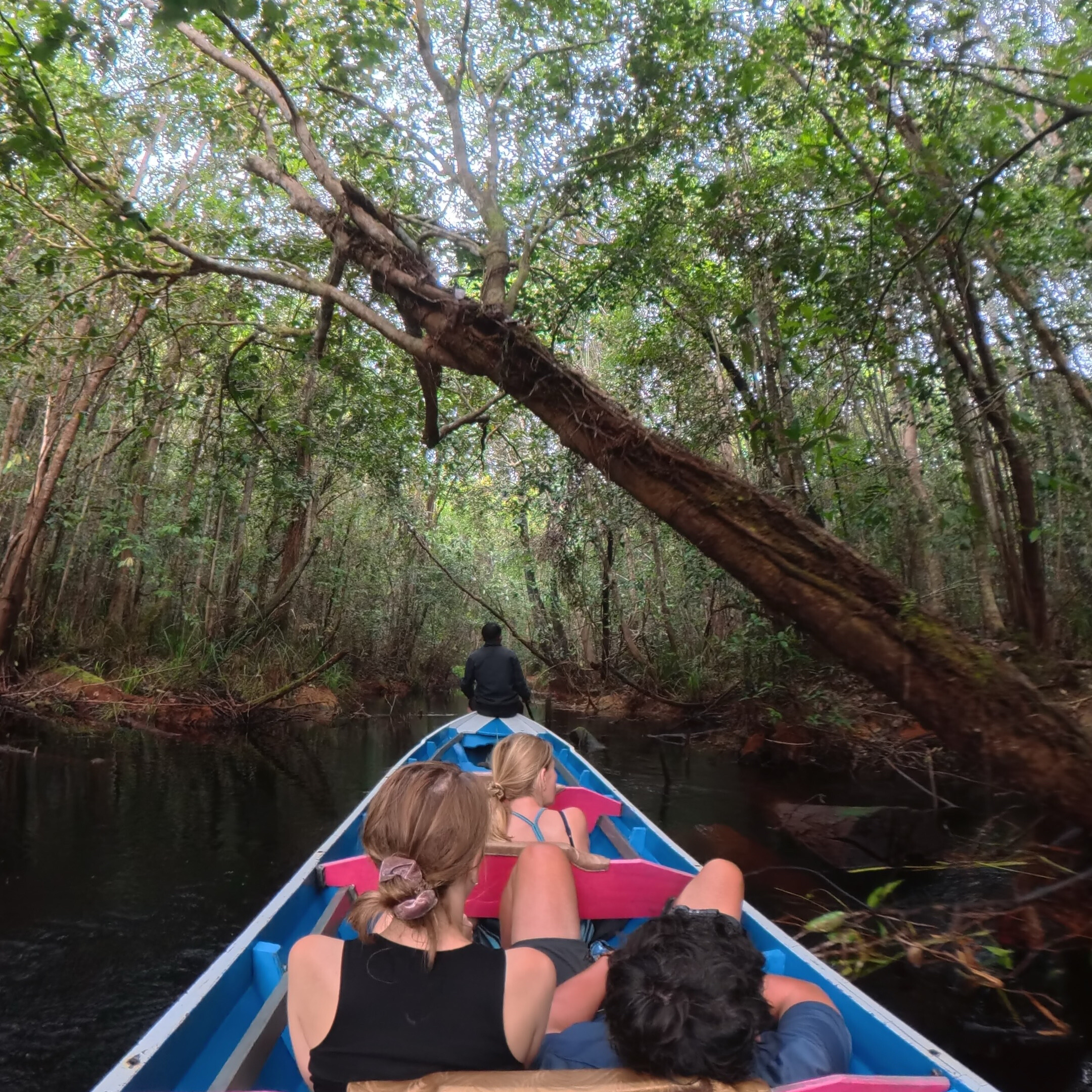
Far from being dirty, the water is clean and acidic, creating a surreal environment. When the sun shines, the surface reflects the surrounding forest and clouds with mirror-like perfection. At dawn and dusk, the rivers glow with golden light, producing scenes that feel almost otherworldly.
These rivers are not just beautiful—they are lifelines for the ecosystem. They connect remote parts of the forest, provide habitat for countless species, and sustain local communities who rely on them for transportation and fishing.
The Journey Into Sebangau: River Cruises by Kelotok
Your adventure into Sebangau usually begins in Kereng Bangkirai, a small village just 20 minutes from Palangka Raya, the capital of Central Kalimantan. From here, you’ll board a traditional motorized canoe called a kelotok, the primary way to navigate the waterways.
The journey itself is a highlight:
- The boat glides slowly along the river, giving you plenty of time to observe the forest.
- You’ll hear the calls of gibbons, the splashes of fish, and the songs of tropical birds.
- The gentle hum of the kelotok is the only human sound—everything else belongs to nature.
Many tours offer half-day or full-day river cruises, but for the best experience, consider staying overnight in a simple eco-guesthouse or homestay near the park. This way, you can enjoy both sunrise and sunset on the river.
The Best Times to Explore the Rivers
The magic of Sebangau’s blackwater rivers changes depending on the time of day and season.
- Morning (5:30–8:00 AM): Mist rises from the water, and the forest wakes up with bird calls and gibbon songs. Perfect for photographers.
- Afternoon (3:00–5:30 PM): Wildlife is active again, and the golden hour light reflects beautifully on the water.
- Evening (sunset cruises): The sky turns red, orange, and purple, mirrored on the dark river. If you’re lucky, you might see proboscis monkeys preparing to sleep in riverside trees.
For the best overall experience, plan your visit during the dry season (June to September). Water levels are more predictable, and wildlife spotting is easier. However, the wet season (October to May) also has its charm, with lush greenery and fewer tourists.
Wildlife Along Sebangau’s Blackwater Rivers
The rivers of Sebangau are alive with wildlife. While Tanjung Puting National Park is more famous for orangutan viewing, Sebangau offers a wilder, less crowded alternative.
Some of the animals you might encounter include:
- Orangutans – With an estimated population of over 6,000 individuals, Sebangau is one of the most important orangutan habitats in the world. Seeing one swinging in the trees from your canoe is a magical moment.
- Proboscis Monkeys (Bekantan) – Endemic to Borneo, these charismatic monkeys with long noses are often seen along riverbanks in the late afternoon.
- Gibbons and Macaques – Their calls echo through the forest, especially in the morning.
- Birds – More than 200 species, including hornbills, kingfishers, and rare swamp-dwelling species.
- Reptiles and Insects – From colorful dragonflies dancing over the water to shy monitor lizards basking on the banks.
For wildlife lovers and photographers, the rivers are a paradise. Every bend in the water brings new surprises.
Photography Tips for the Blackwater Rivers
The blackwater rivers are among the most photogenic locations in Borneo. To capture their beauty:
- Use reflections creatively: Frame shots so the sky and trees appear doubled in the water.
- Golden hour is key: Sunrise and sunset provide the best lighting conditions.
- Protect your gear: Bring a waterproof bag in case of splashes or rain.
- Long lenses for wildlife: A 200–300mm zoom lens is ideal for photographing orangutans and birds.
- Stay patient: The forest is alive, but sightings depend on luck and timing.
The Importance of Sebangau’s Rivers and Forests
Sebangau is more than just a tourist destination—it’s a critical ecosystem for the planet. The peat swamp forest, nourished by these blackwater rivers, stores enormous amounts of carbon. In fact, peatlands are one of the most effective natural carbon sinks, making Sebangau a vital ally in the fight against climate change.
Unfortunately, the park has faced threats from illegal logging, forest fires, and land conversion. Today, conservation organizations and local communities are working together to protect it. By visiting Sebangau responsibly, travelers contribute to eco-tourism initiatives that provide sustainable income and reduce pressure on the forest.
Where to Stay Near Sebangau National Park
While there are no luxury lodges inside the park, several options are available around Palangka Raya and Kereng Bangkirai:
- Eco-guesthouses – Simple accommodations run by local communities, offering meals and guided trips.
- Homestays – Stay with local Dayak families to experience authentic culture.
- Hotels in Palangka Raya – Comfortable city hotels are available if you prefer to visit Sebangau on day trips.
Staying close to the park allows you to enjoy early morning or late evening river cruises, which are often the most rewarding.
Practical Travel Tips
- Getting there: Fly to Palangka Raya (Tjilik Riwut Airport), then take a short car ride to Kereng Bangkirai.
- What to bring: Lightweight clothing, insect repellent, waterproof bags, binoculars, and a reusable water bottle.
- Health & safety: The area is generally safe, but prepare for humid conditions and occasional rain.
- Guides: Always travel with a licensed local guide. They know the best wildlife spots and help support the local economy.
- Respect nature: Keep noise to a minimum, don’t feed wildlife, and carry out all trash.
Why You Shouldn’t Miss Sebangau’s Blackwater Rivers
While many travelers flock to the more famous Tanjung Puting National Park, Sebangau remains a hidden gem. It offers a quieter, more authentic experience, with fewer tourists and an equally rich ecosystem.
Here’s why a blackwater river cruise should be on your Borneo bucket list:
- Stunning natural beauty with mirror-like reflections
- High chance of seeing orangutans and proboscis monkeys
- Opportunities to support eco-tourism and conservation
- Unique cultural encounters with Dayak communities
- A sense of peace and connection with untouched wilderness
Conclusion
Exploring the blackwater rivers of Sebangau National Park is more than a sightseeing trip—it’s a journey into the heart of one of the world’s most important ecosystems. Whether you’re drawn by the wildlife, the scenery, or the chance to contribute to conservation, the experience will leave a lasting impression.
As your canoe glides silently over the dark waters, you’ll realize that Sebangau is not just a destination—it’s a reminder of how beautiful and fragile our planet truly is.
So, if you’re planning a trip to Borneo, don’t miss the opportunity to drift along Sebangau’s blackwater rivers. It’s an adventure you’ll never forget.