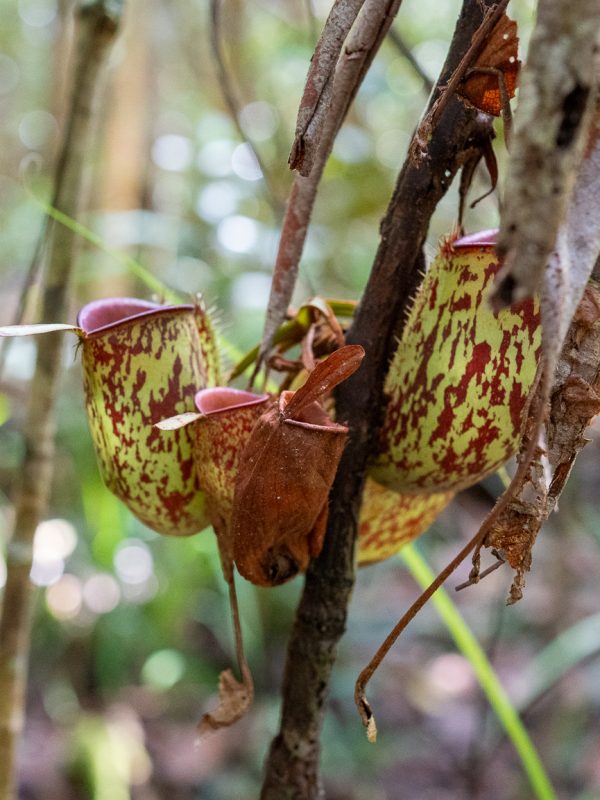
Sebangau National Park in Central Kalimantan is not only famous for its orangutans and peat swamp forests, but also for one of the most fascinating plants in the world—Nepenthes, also known as tropical pitcher plants or kantong semar.
For nature lovers, botanists, and eco-travelers, spotting Nepenthes in the wild is one of the most unique experiences you can have while exploring Sebangau.
What is Nepenthes?
Nepenthes are carnivorous plants that have evolved to survive in nutrient-poor environments. Instead of relying on soil, they capture and digest insects using specialized pitcher-shaped leaves.
Each “pitcher” acts as a natural trap:
- Bright colors attract insects
- Slippery rims cause prey to fall inside
- Digestive fluids break down the insects
- Nutrients are absorbed by the plant
With more than 150 species worldwide, Borneo—including Sebangau National Park—is one of the richest regions for Nepenthes diversity.
Why Nepenthes Grow in Sebangau National Park
Sebangau is dominated by peat swamp forest, a challenging environment where most plants struggle due to:
- Acidic soil
- Low nutrient levels
- Waterlogged conditions
Nepenthes thrive here because they have adapted to obtain nutrients from insects rather than soil. This makes Sebangau an ideal habitat for these unique plants.
Nepenthes Species Found in Sebangau
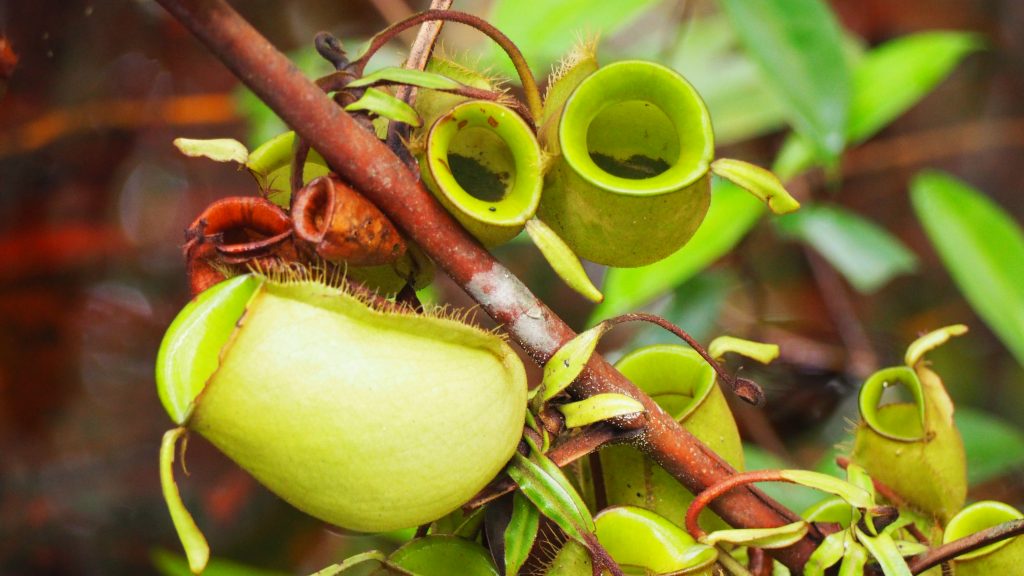
1. Nepenthes ampullaria
One of the most commonly seen species in Sebangau.
Key characteristics:
- Small, rounded pitchers
- Grows in clusters on the forest floor
- Green or reddish with spotted patterns
Unlike many other Nepenthes, Nepenthes ampullaria often feeds on fallen leaves and organic matter, making it an important part of the forest’s nutrient cycle.
2. Nepenthes mirabilis
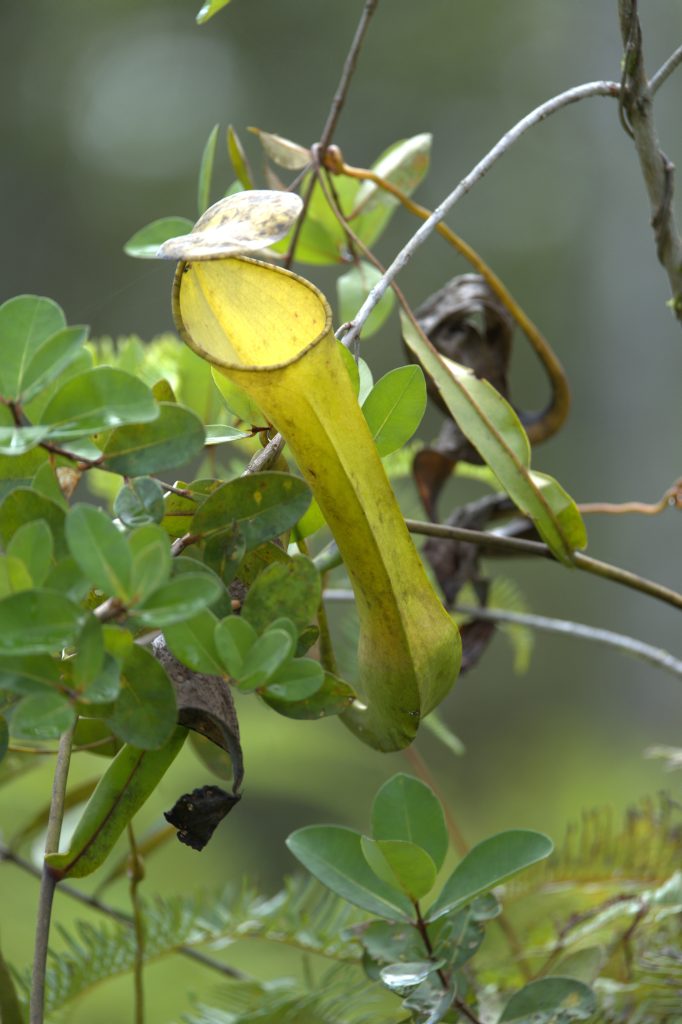
A highly adaptable and widespread species.
Key characteristics:
- Slender, elongated pitchers
- Found in open swamp areas and riverbanks
- Can grow as a climbing vine
This species is often spotted during river tours in Sebangau.
3. Other Possible Species
Depending on the location and conditions, visitors may also encounter:
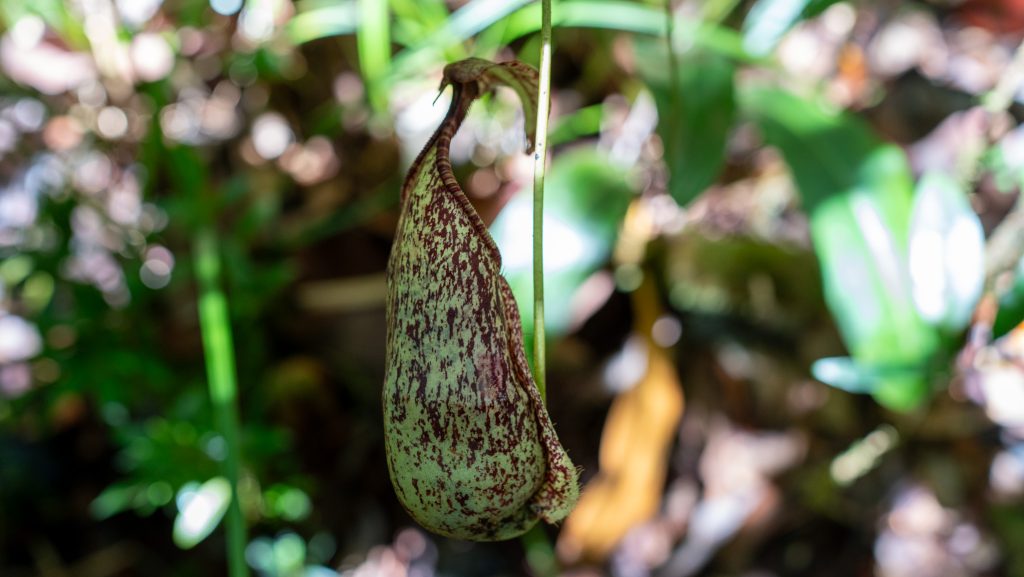
- Nepenthes rafflesiana – known for large and colorful pitchers
- Nepenthes gracilis – thin, elegant pitchers that grow on climbing stems
Each trekking route in Sebangau offers a different opportunity to discover these plants.
Ecological Role of Nepenthes
Nepenthes are not just visually unique—they are also important to the ecosystem:
- Help recycle nutrients in poor soils
- Provide habitat for small organisms inside their pitchers
- Serve as indicators of a healthy peat forest
Their presence reflects the ecological balance of Sebangau National Park.
Threats and Conservation
Despite their adaptability, Nepenthes face increasing threats:
- Deforestation and land conversion
- Peatland fires
- Illegal plant collection
Protecting Sebangau National Park is essential to ensure the survival of these rare and fascinating plants.
Best Time and Tips to See Nepenthes in Sebangau
To increase your chances of spotting Nepenthes in the wild:
- Join a guided jungle trek or river tour
- Look along forest trails and riverbanks
- Visit during the dry season for easier access
- Bring a camera for macro photography
Local guides from Sebangau Tour can help you find species that are often hidden from untrained eyes.
Why Nepenthes are a Must-See in Sebangau
Seeing Nepenthes in their natural habitat is a rare experience. Unlike cultivated plants, wild Nepenthes in Sebangau grow freely in untouched rainforest, making every encounter feel authentic and special.
For travelers seeking something beyond wildlife, Nepenthes offer a deeper look into the complexity and beauty of Borneo’s ecosystem.
Conclusion
Nepenthes are one of the most extraordinary plants you can discover in Sebangau National Park. Their ability to survive, adapt, and thrive in extreme conditions makes them a true symbol of the peat swamp forest.
If you’re planning a trip to Sebangau, don’t miss the chance to see these carnivorous plants up close—they are small, but unforgettable.