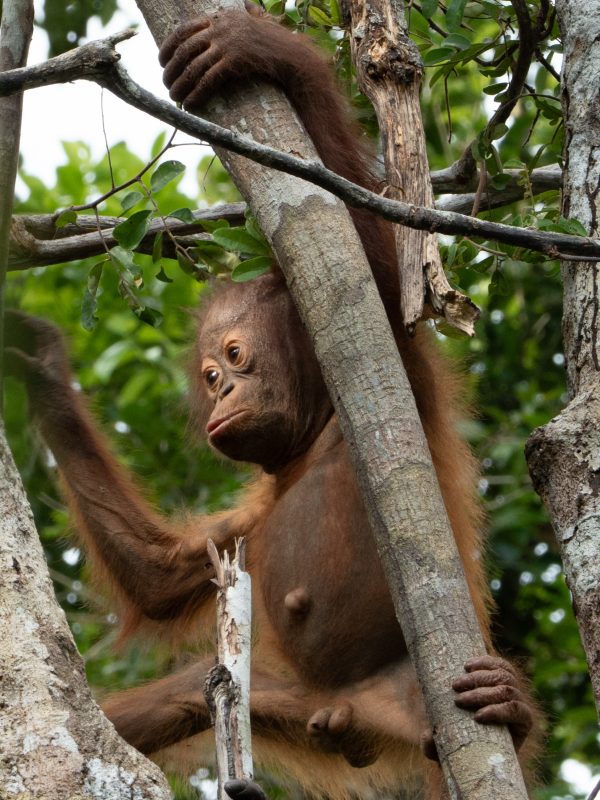
When people dream of seeing orangutans in the wild, many imagine a dense tropical rainforest filled with towering trees and the sounds of nature. Few realize that one of the best places to experience this incredible wildlife encounter is hidden within the vast peat swamp forests of Central Kalimantan.
Sebangau National Park is home to one of the largest remaining populations of wild Bornean orangutans. Unlike zoos or wildlife parks, every sighting here is completely natural. The orangutans are free to roam, forage, build nests, and raise their young exactly as they have for thousands of years.
For travelers seeking an authentic rainforest adventure, Sebangau offers much more than wildlife—it offers a chance to witness one of Earth’s most remarkable ecosystems.
A Rainforest Unlike Any Other
Sebangau National Park protects more than half a million hectares of tropical peat swamp forest.
At first glance, the forest may seem quiet, but it is full of life. Beneath the dense canopy lies an intricate ecosystem shaped by blackwater rivers, ancient peat soils, and seasonal flooding. These unique conditions support hundreds of plant and animal species that have adapted to this extraordinary environment.
For orangutans, the forest provides everything they need:
- Seasonal fruits
- Young leaves
- Tree bark
- Safe nesting sites
- Natural travel routes through the canopy
Every tree plays an important role in their survival.
A Safe Home for Thousands of Orangutans
Conservation researchers estimate that Sebangau National Park supports one of the world’s largest wild populations of Bornean orangutans.
Unlike fragmented forests where wildlife struggles to find food and shelter, Sebangau’s protected landscape allows orangutans to live across a vast, connected habitat.
Here they can:
- Search for seasonal fruits.
- Raise their young.
- Build new nests every evening.
- Move freely between feeding areas.
Because the forest remains largely intact, visitors have the opportunity to observe natural orangutan behavior rather than animals that have become dependent on humans.
Every Wildlife Encounter Is Earned
One of the things that makes Sebangau special is that wildlife sightings cannot be guaranteed.
That may sound surprising, but it is exactly what makes the experience so rewarding.
Instead of gathering at feeding stations, visitors quietly travel through rivers and forest trails while experienced local guides search for signs of wildlife.
Sometimes you may hear branches moving high above before spotting an orangutan climbing through the canopy.
Other times, your guide may notice a freshly built nest or identify distant calls echoing through the forest.
Each encounter feels like a genuine discovery.
More Than Orangutans
Although orangutans are the stars of the park, they are far from the only residents.
As you explore Sebangau National Park, you may also encounter:
- Proboscis monkeys
- Red langurs
- Long-tailed macaques
- Hornbills
- Kingfishers
- Monitor lizards
- Colorful butterflies
- Hundreds of tropical bird species
The diversity of wildlife means every boat journey and jungle walk offers something new to observe.
The Importance of Peat Swamp Forests
Sebangau is famous not only for its wildlife but also for its peat swamp ecosystem.
Peatlands store enormous amounts of carbon beneath the forest floor, making them one of the planet’s most valuable natural defenses against climate change.
Healthy peat forests also help regulate water systems, reduce flooding, and provide habitat for countless species.
Protecting orangutans therefore also means protecting one of the world’s most important ecosystems.
Responsible Tourism Makes a Difference
Visiting Sebangau National Park is more than an unforgettable travel experience.
Responsible tourism helps:
- Support local guides and boat operators.
- Create sustainable livelihoods for nearby communities.
- Encourage rainforest conservation.
- Promote environmental education.
- Increase awareness about protecting endangered wildlife.
By choosing ethical tours that respect wildlife and follow conservation guidelines, visitors become part of the long-term effort to protect this extraordinary rainforest.
What to Expect During an Orangutan Tour
Most tours begin with a peaceful boat ride along the Sebangau River before continuing deeper into the forest.
Along the way, visitors enjoy:
- Scenic blackwater rivers
- Traditional wooden boats
- Quiet rainforest sounds
- Wildlife observation
- Guided jungle trekking
- Opportunities for birdwatching and photography
Patience is part of the adventure. Wildlife follows its own schedule, making every moment feel authentic and exciting.
Why Sebangau Deserves a Place on Your Travel List
Many destinations promise wildlife experiences, but few offer the opportunity to see endangered orangutans living freely in one of the world’s oldest rainforests.
Sebangau National Park is not simply a place to observe animals. It is a living ecosystem where forests, rivers, wildlife, and local communities remain deeply connected.
Every visit supports conservation while creating memories that last a lifetime.
If you’re looking for an ethical and unforgettable orangutan adventure in Borneo, Sebangau National Park offers one of the most rewarding experiences you’ll ever have.
Frequently Asked Questions
Are the orangutans in Sebangau National Park wild?
Yes. The orangutans in Sebangau National Park are completely wild and live naturally within the protected rainforest.
When is the best time to visit Sebangau National Park?
The dry season, generally from June to September, offers more favorable weather and easier access, although wildlife can be seen throughout the year.
Can I see other wildlife besides orangutans?
Absolutely. Visitors often spot proboscis monkeys, hornbills, kingfishers, macaques, reptiles, and many species of tropical birds during their tour.
Why is Sebangau National Park important?
The park protects one of the largest remaining peat swamp forests in Borneo, providing critical habitat for thousands of wild orangutans while storing vast amounts of carbon that help combat climate change.